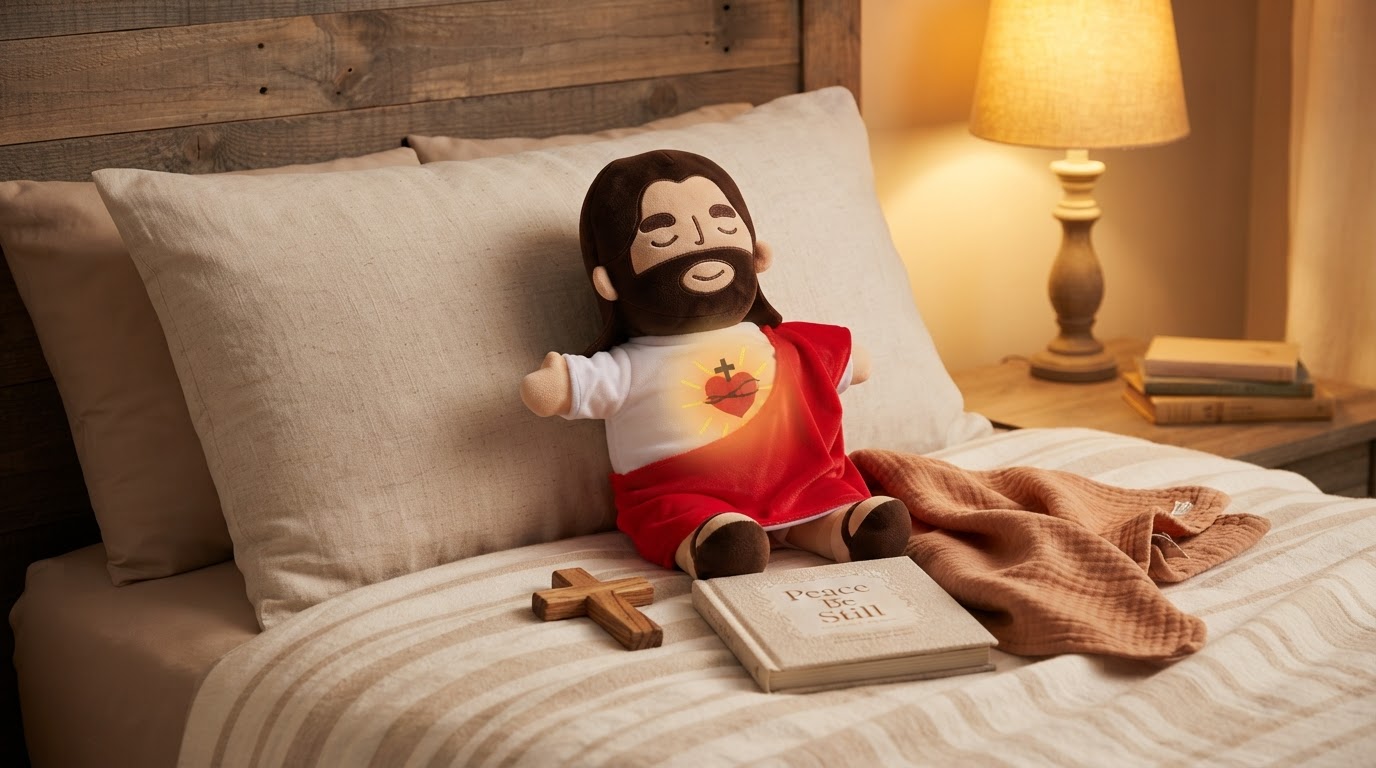
Breathing Jesus Plush for Sensory Bedtime Support
 Sam VasquezBuying Guide Lead
September 8, 2026. This guide evaluates the effectiveness of incorporating a Jesus stuffed animal with heartbeat technology into a child's nightly routine. It is written for parents and caregivers seeking tangible, faith-based sensory tools to help children manage bedtime anxiety.
The Role of Sensory Rhythm in Childhood Sleep
Bedtime often represents a significant transition for young children, moving from active engagement to a state of stillness. For many, this transition triggers a stress response that makes falling asleep difficult. Traditional plush toys provide soft tactile feedback, but they lack the active sensory input required to regulate a child's nervous system. According to eBay product listings for the Jesus Plush Heartbeat Vibration, a gentle, rhythmic 10-minute heartbeat is designed to bring steady comfort during quiet time or prayer. This rhythmic input mimics the biological presence of a caregiver, which is a recognized method for lowering cortisol levels in developing children. When a child experiences the sensation of a heartbeat, it provides a physical anchor that helps them focus on their own breathing. This is particularly useful when choosing a soothing Jesus plush toy that serves a functional purpose beyond just decoration. Without this rhythmic component, a standard doll may not be enough to soothe a child who struggles with sensory processing or separation anxiety at night. Between these two options—a standard doll and one with rhythmic feedback—I’d go with the version that offers active sensory engagement every time.
Technical Integration of the Breathing Jesus Plush
The Breathing Jesus Plush addresses the need for a jesus stuffed animal for sleep by combining soft materials with internal haptic technology. Unlike static dolls, such as the Sacred Heart Jesus Catholic Plush Doll from House of Joppa, which stands 8 inches tall and focuses on visual iconography like the radiant heart, the Breathing Jesus Plush focuses on the physical experience of companionship. The internal mechanism produces a subtle rising and falling motion that simulates natural respiration. This is not a loud or mechanical movement; it is designed to be felt rather than heard, making it an effective sleeping jesus doll with breathing motion. The integration of this technology into a Christian figure allows parents to introduce prayer and faith concepts alongside physical relaxation techniques. The plush is constructed with child-safe battery compartments and durable fabric to ensure it withstands nightly use. If you are looking for a christian sleeping aid for kids, the primary benefit here is the dual-layer of comfort: the spiritual reminder of God's presence and the physical sensation of a living, breathing companion. Skip this if your child is sensitive to any internal electronic components or prefers a completely weightless toy, as the breathing mechanism does add a slight, grounded weight to the plush.
Selecting the Right Heartbeat Companion

Photo by cottonbro studio on Pexels
When you are deciding which version of a faith-based sleep aid to purchase, you need to look at the specific haptic features. Here’s what I’d actually buy: a model that combines both the heartbeat vibration and the rhythmic chest movement. The heartbeat provides the initial grounding, while the breathing motion helps the child pace their own breath to match the toy. If you're on a budget, a basic heartbeat-only model will still provide the essential rhythmic feedback needed for calming. However, for long-term sleep training, the breathing motion is superior. Before finalizing a purchase, check the following criteria:
- Verify the duration of the heartbeat cycle; 10 minutes is the standard for falling asleep.
- Ensure the battery compartment is secured with a screw-down panel for safety.
- Check if the plush exterior is spot-cleanable or has a removable electronic module for washing.
- Confirm the size is appropriate for the child to hug; a 13-inch model is typically ideal for toddlers and school-aged children.
- Assess the volume of the heartbeat; it should be a low-frequency pulse, not a high-pitched beep.